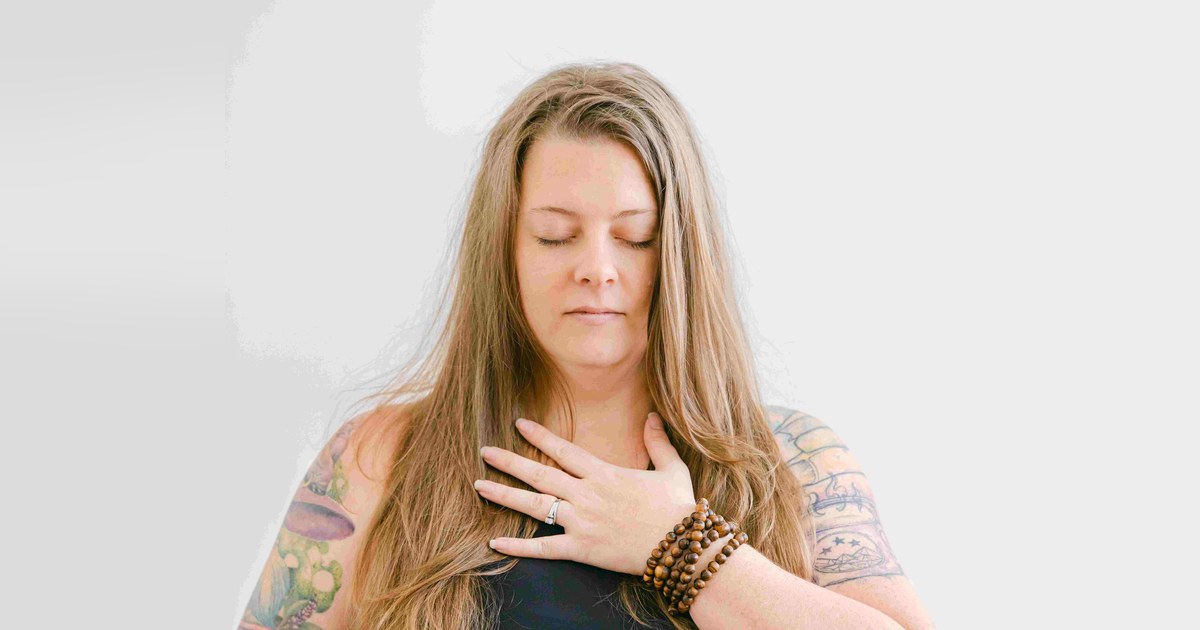
Traveling is always really hard on my body.
After a 16-hour drive, I’m not dreaming about the hotel pool. I’m longing for my mat. It’s not uncommon to find me, as soon as we get where we’re going, rolling around on the ground doing the twists I know will help my low back and my hips. (Yes, on the floor. Before I’ve even unpacked. 😂)
And here’s the thing. It’s usually about five minutes. A few slow breaths aimed right where I’m tight, a few poses aimed at the same spots. That’s ENOUGH to release my muscles and joints from a hard day in the car, and to bring my nervous system back to calm.
So is 10 minutes of yoga enough?
Short answer: YES.
Long answer: it’s enough more often than the voice in your head will let you believe. You know the voice. The one that says if you can’t do the full hour, with the candle lit and the good playlist and nobody needing you, then why bother.
Our theme this week is let it be enough. It’s the dark half of the year. The days are short, the to-do list is long, and the holidays are coming at us like a runaway shopping cart. This is exactly when “all or nothing” turns into “nothing.”
So let’s talk about the practice you actually have time for. Not the one in the pretty picture.
Your body counts everything
Here’s the part nobody tells you in a 90-minute class: your body doesn’t grade your practice. It doesn’t know whether you did the “real” version. It just responds to what you gave it.
Plain language, here’s how that works.
Your tissues adapt to what you do often. Muscles, tendons, and joints get better at the positions and loads you visit regularly. A hip you open for a few minutes most days gets a steadier message than a hip you open for an hour once a month and then ignore.
Your nervous system learns patterns. When you slow your exhale and soften your shoulders, you’re giving your body a signal that it’s safe to come down a notch. The more often you practice that shift, the more familiar it gets. It’s a skill, like anything else, and skills grow with reps.
Your brain loves a small win. A practice you finish feels good. A practice you planned and skipped feels like one more thing you failed at. Guess which one makes you come back tomorrow?
That’s where the theme meets the body. “Enough” isn’t settling. It’s literally how your body changes: small doses, over and over. Five minutes on a hotel floor counts.
What the research really says
I’ll keep this honest, because there’s a lot of overclaiming out there.
Short bouts of movement count. For years, the US activity guidelines said activity had to last at least 10 minutes to “count.” The 2018 update dropped that. As the American Physical Therapy Association summed it up, the new guidelines reinforce the benefit of activity at any level by removing statements that it must last at least 10 minutes to be effective (APTA, 2018). Those guidelines are mostly about heart health and general activity, not yoga specifically. But the big idea carries over: short sessions are not wasted sessions.
How often you practice at home seems to matter. A national survey of more than 1,000 people from US Iyengar yoga studios looked at what went along with better health. The finding that jumped out: how often people practiced at home predicted things like well-being, mindfulness, sleep, and fatigue better than how many years they’d practiced or how many classes they took (Ross et al., 2012).
Now the limits, because they matter. That was a one-time survey, so it can’t prove that home practice caused the better health. Maybe people who feel better just practice more. The people who answered were mostly women, mostly highly educated, and all from one style of yoga. And the study counted how many days people practiced, not how long each session was.
Here’s how I read it after 15 years in the room: NO study says 10 minutes will fix everything. But nothing in the research says a short practice doesn’t count. And the practice that happens most days beats the perfect practice that never happens.
Want the short practice already planned for you? Start Small is five 5-minute flows for the days you have nothing left, so "enough" is ready before you need it. It's free. Get Start Small.
A 2-minute check-in: before and after
Try this before a short practice, then again after. You’re not testing whether you’re “good at yoga.” You’re checking whether 10 minutes did something.
1. Where’s your breath? Put one hand on your chest and one on your belly. Take three normal breaths. Which hand moves more? Is the breath short and high, or does it reach your belly and the backs of your ribs?
2. Where are your shoulders? Without changing anything, notice. Are they up near your ears? Is your jaw clenched? Is your tongue glued to the roof of your mouth?
3. How does standing feel? Stand up, feet hip-width apart, and let your arms hang. Does your weight sit evenly on both feet? Are you gripping your belly or locking your knees?
Then do your practice and check again. If your breath dropped lower, your shoulders came down, or you feel a little more even on your feet, that’s your proof. It was enough.
The pick-three practice
Here’s what I want you to try this week. Instead of “I’ll do yoga when I have an hour,” pick three poses. That’s it. Three poses, a few slow breaths each, done.
These three come from my free 14-minute floor class for tight hips and lower back, so if you want the full version, it’s waiting for you: Yoga for Tight Hips and Lower Back, 14-Minute Floor Wind-Down. On a busy day, these three are the “enough” version. They’re also pretty much what I do on the floor after a long drive: a hip opener, some slow twisting through the hips and low back, and a rest.
New this week: if you want strong instead of slow, try my new Standing Yoga for Strength class. Twelve minutes, one block, and chair, warrior two and side angle. (The thumbnail says “thighs on fire.” It’s not lying.) It’s live now, so grab a block and come play:
Grab a folded blanket or a pillow. Come as you are.
Runner’s lunge. Cue: soften the back knee. This opens the front of the hip, the part that gets short from sitting all day. Put the back knee down on a blanket so you’re not working harder than you need to. The common mistake is dumping your weight forward and arching your low back to “get deeper.” Keep your ribs stacked over your hips. Deeper isn’t the goal. Enough is the goal. Five slow breaths, then switch sides.
Windshield wiper knees. Cue: let them fall slowly. Lie on your back, knees bent, feet wider than your hips. Let both knees drop to one side, then the other. This is hip rotation, a movement most of our days skip completely. The mistake is rushing it and letting momentum swing the knees. Slow is where your hips actually learn something. Ten easy drops.
Legs up the wall. Cue: nothing to do. Scoot your hips close to a wall and rest your legs up it. A pillow under your hips if that feels nice. Stay for a few minutes and let your breath get slow and low. The mistake? Skipping it because it “doesn’t feel like doing anything.” That’s the whole point. This is where your nervous system gets the message that you’re done for the day.
That’s around 10 minutes. If you want to keep going, keep going. If you don’t? You practiced. It counts.
Real talk: why “not enough” keeps us stuck
Here’s a pattern that’s SO easy to fall into. You love yoga. Life gets full. You can’t make it to class, so you decide to “get back into it” when things calm down. Things never calm down. Months go by, and now the gap feels so big that starting again feels like starting over.
The pretty-picture version of yoga doesn’t help. The hour-long practice in the sunlit studio, the perfect outfit, the advanced pose at the end. That’s not real life for a lot of people. Real life is five minutes on the living room floor while the dog sniffs your face.
Letting it be enough doesn’t mean you quit trying. It means you set the bar somewhere you can actually reach it. Then you reach it again tomorrow.
Make it stick off the mat
- Pick your three the night before. Decide which three poses you’ll do tomorrow. Less deciding means more doing.
- Attach it to something you already do. After you brush your teeth, after you start the coffee, after you get home and kick off your shoes.
- Leave your mat out. If it’s rolled up in a closet, it’s a project. If it’s on the floor, it’s an invitation.
- Use a timer and stop when it goes off. Stopping while it still feels good makes you want to come back.
- Count days, not minutes. Three short practices this week is a win. Write it down if that helps you see it.
When to see a professional
If you have pain that’s sharp, getting worse, or keeps you up at night, numbness or tingling, or pain after a fall or injury, check in with your doctor or a physical therapist before you add new movement. If stress, sleep, or mood are feeling like more than a busy season, talk to someone you trust or a health professional. Yoga is a great partner to care, not a replacement for it.
Let it be enough
You don’t have to earn rest by doing the full hour. You don’t have to wait for a calmer season to come back to your mat. Three poses on a Tuesday night count. Five minutes rolling around on a hotel floor after 16 hours in the car count. (Ask me how I know.) Your body is listening to all of it.
So this week, let it be enough. Then let it be enough again tomorrow.
Now tell me: what’s the smallest practice you’ve ever done that actually helped? Drop it in the comments on the video, or hit reply if you’re on my email list. I read every one.
Want to slow down before the holiday rush? Practice with me live on Thanksgiving eve at the Gratitude VinYin, Wednesday, Nov 25, 6pm CT: a warm vinyasa to shake off the week, then long, quiet yin holds so you walk into the holiday steadier. Donation-based, camera off is fine, and the replay is included. Feel Good Flow is back Wednesday, Dec 2. Save your spot.
Get Start Small, free